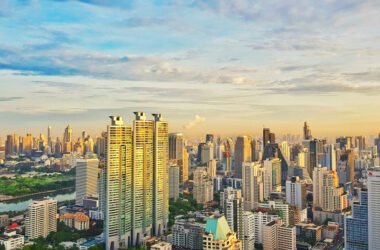





The real estate market in Thailand is entering a new chapter—one written in the language of rebounding tourism, investor incentives, and a digital-first approach to home buying. From high-rise glass towers in Bangkok’s central business district to the sun-drenched hillside villas of Koh Samui, buyers in 2025 are navigating a landscape that is both stable and surging. Thailand-Real.Estate, a key platform for exploring properties for sale in Thailand, provides the kind of access and data transparency modern investors crave. Whether it’s a downtown apartment, a suburban townhouse, or a luxury villa for sale in Thailand, the options are expanding—and evolving fast.
Where Prices Are Headed: A Climb, Not a Sprint
It’s not a boom. It’s a burn—steady, quiet, but unmistakable. Despite lukewarm domestic demand, real estate in Thailand has continued to inch upward. National residential prices rose 2.71% in Q2 2025. The real driver? Land and construction cost inflation. Townhouses outpaced the pack with a 4.88% annual jump, while single-detached homes followed with a modest 2.64% bump.
| Segment | Q2 2025 YoY Change |
|---|---|
| Single-detached houses | +2.64% |
| Townhouses | +4.88% |
| Nationwide price index | +2.71% |
Zoom into the map, and the regional variance tells a story. The South led with +5.48% growth. The North barely hit 1.84%. Bangkok, the bellwether, hovered at +2.54%. But dig deeper: townhouses in Bangkok leapt 4.88%, while condos struggled to breach 1.5%. Translation: horizontal living still trumps vertical in the capital’s eyes.
Yield Math: Who’s Getting Paid, and Where
Let’s talk cash flow. Average gross rental yields nationwide stand at a respectable 5.5%—but averages lie. Bangkok condos clock in at a muted 3.1%, dampened by high prices and slower rental absorption. But pivot to the islands—Phuket and Koh Samui—and the numbers leap.
| Location | Rental Yield Range |
|---|---|
| Bangkok | ~3.1% |
| Phuket | 4.8% – 6.7% |
| Koh Samui | 5% – 16% |
Phuket’s beachfront condos bring in up to 6.7%, while Koh Samui’s villa rental game, buoyed by tourists and limited inventory, occasionally breaks the 15% ceiling. In short: urban markets offer predictability. Island markets offer upside. Choose your flavor.
The 2026 Advantage: Incentives That Actually Matter
The Thai government is not playing around. To boost the sector and stimulate domestic ownership, policymakers extended buyer-friendly policies into mid-2026. Here’s what’s on the table:
- Transfer and mortgage fees slashed to 0.01% for properties priced under THB 7 million.
- LTV (loan-to-value) ratios temporarily eased—buyers can borrow more with less down.
- A THB 55 billion soft loan program rolling out for homebuyers and renovators.
The outcome? A window of reduced friction, lasting through June 30, 2026. Buyers eyeing long-term appreciation or short-term rental returns have a rare moment to lock in favorable terms.
Location Deep Dive: Not Just Bangkok Anymore
Bangkok:
It’s still the engine. The infrastructure, the job market, the lifestyle perks—it’s all here. Average CBD condo prices sit around THB 236,000/sq m, while suburban options float closer to THB 127,000/sq m. For professionals, it’s a lifestyle play. For investors, it’s stable—but unlikely to spike.
Phuket:
The poster child for lifestyle luxury. Condo prices average THB 114,000/sq m, villas start around THB 60,000/sq m and can stretch beyond THB 95,000. Branded residences carry a 32% premium, yet remain in high demand. Short-term rentals are strong. So is resale interest.
Chiang Mai:
Digital nomads, expats, and lifestyle migrants are clustering here. Prices remain accessible—THB 58,000–84,000/sq m for condos—and rental yields between 4–8.2% make the math work. With new airport upgrades and a light-rail system in development, long-term growth is likely.
Pattaya / Chonburi:
Infrastructure upgrades are the name of the game. A new high-speed rail to Bangkok (2029) and airport enhancements are making this region hot. Yields on high-end condos range from 5–10%.
Koh Samui:
This island is different. Limited land. High-end demand. Villa prices jumped 8–15% in 2024 alone. With proposed legal changes potentially increasing the foreign condo-ownership quota to 75%, there’s significant upside here.
Foreign Fuel: Myanmar Steps In
In an unexpected shift, Myanmar nationals became the second-largest foreign buyer group in 2024. Their condo purchases jumped threefold, passing 1,000 units valued at over THB 5.4 billion. This influx highlights Thailand’s appeal as a financial and political safe haven amid regional volatility.
Foreign ownership rules cap condo ownership at 49% per building—but demand keeps climbing. Chinese buyers remain dominant, but expect growth from India, Russia, and Southeast Asia as new visa and tax schemes roll out.
Next-Gen Real Estate: It’s Getting Smarter
Thailand’s property developers are catching up—and fast. Smart-home systems, energy efficiency, and IoT integration are becoming standard in mid-to-upper tier developments. ESG alignment isn’t just a buzzword; it’s a market differentiator.
PropTech is also quietly revolutionizing transactions. Virtual tours, blockchain title deeds, and AI-driven valuation models are changing the way both locals and foreigners approach property in Thailand.
And then, there’s the casino wildcard.
Thailand’s parliament is actively debating legislation to permit integrated resorts with casinos—a move that could unlock US$3 billion in private investment and redefine real estate in places like Pattaya, Phuket, and Chiang Mai. Watch this space.
Countdown to 2026: What Smart Buyers Should Be Doing Now
Here’s the bottom line: the stars are aligned. A recovering tourism industry, infrastructure megaprojects, government-backed affordability schemes, and evolving lifestyle preferences are converging.
What to do with all this?
- Act before June 30, 2026 to benefit from slashed taxes and relaxed borrowing limits.
- Focus on yield-rich markets like Koh Samui and Phuket.
- Bet on growth corridors: mixed-use districts, near future rail lines, or in policy-supported urban expansions.
- Keep your eyes on legislative signals—especially on foreign ownership and gaming resorts.
Thailand’s property market isn’t roaring. It’s humming—with consistency, with upside, and with momentum that’s easy to underestimate. If you’re looking for a villa for sale in Thailand, now may be your best chance in a decade.
Real estate in Thailand isn’t a speculative frenzy. It’s an ecosystem—a layered market with pockets of hyper-growth, anchored by stability and backed by policy. The key is knowing where to look and when to act. The option to buy property in Thailand in 2026 might just be your cue.