




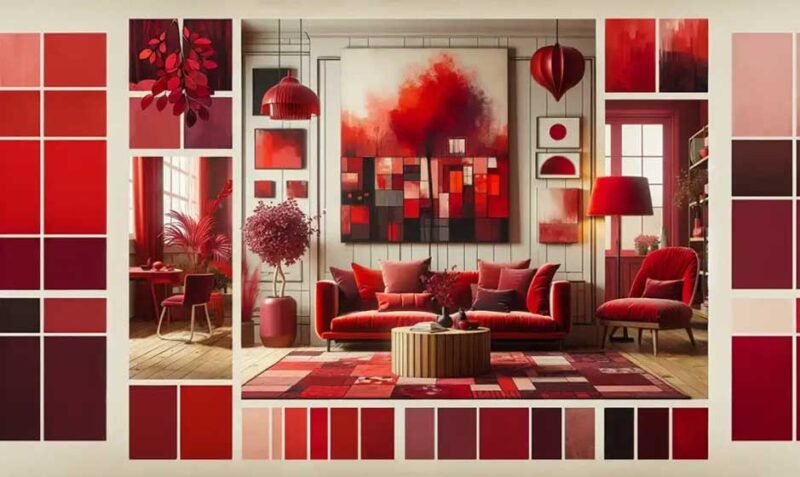
There’s something strangely satisfying about spotting a bold dash of red in a room where it seemingly doesn’t belong. This is the essence of the “Unexpected Red Theory”, which is a design idea rooted in visual psychology as much as aesthetics. The concept revolves around adding a singular red element to a space that otherwise lacks the colour, and somehow, it just works. The effect is instant energy, a sense of cohesion, and a lift in mood that feels almost alchemical.
At its core, this trend taps into how the human brain responds to colour. Red has long been associated with warmth, vitality, and attention. When introduced in an environment dominated by calmer tones, it becomes an anchor for the eye; a focal point that brings balance to a palette that may otherwise fade into the background.
What Makes Red So Powerful?
Red sits at the warmest end of the colour spectrum, which gives it the strongest wavelength of any hue. The brain perceives it more quickly than cooler colours, triggering a subtle sense of alertness. This doesn’t mean a room suddenly feels stressed; instead, the addition of red sparks gentle stimulation, creating visual interest without overwhelming the senses.
Designers often rely on contrast to build depth, and the Unexpected Red Theory does this effortlessly. A space with neutral walls, soft-textured sofas, and understated flooring gains a dynamic edge when a red lampshade, side table, or artwork enters the scene. The small interruption creates movement, almost like a punctuation mark at the end of a well-formed sentence.
Why It Feels so “Unexpected” and Why That Matters
Interiors tend to follow predictable colour stories: harmonious blends, complementary shades, or tonally matched schemes. Red often feels too bold to include without intention, which is why its sudden appearance feels surprising. This contrast between expectation and reality is what makes this theory so compelling.
The unexpected element taps into what psychologists call the novelty response. When something breaks a pattern, attention heightens. Rooms using this theory feel more engaging because the eye instinctively searches for that point of disruption. Even a small red vase on a timber console or a ruby-toned cushion against cool grey upholstery can create this effect.
How to Use the Unexpected Red Theory at Home
This trend is popular largely because it’s effortless to experiment with. A room doesn’t need a complete overhaul; just a thoughtful red accent placed where the eye naturally wanders.
Start with small pieces: a cherry-red stool tucked beneath a kitchen counter or a scarlet throw draped across a bed instantly elevates an otherwise calm palette. In open-plan living areas, a lacquered red tray on a coffee table or a red-framed print against soft white walls creates a similar impact.
Balance with texture: red pairs beautifully with natural materials. Think terracotta-toned ceramics on oak shelving or a deep red cushion resting on boucle seating. Where flooring is part of the backdrop, like pale parquet patterns or charcoal tiles, the red accent becomes even more pronounced and helps tie the space together.
Choose the right shade: not all reds shout. Deep burgundy adds sophistication, while tomato red brings playful energy. Even muted brick tones can offer the same “unexpected” effect in subtler schemes. The key is contrast, not intensity.
Let it be the star: resist the urge to sprinkle red everywhere. The theory works because the colour appears once or twice, not in abundance. One striking lamp, chair, or object does more for a room than multiple competing touches.
The Mood-Boosting Effect
Beyond aesthetics, red influences emotion. It adds warmth to cooler spaces, making rooms feel more alive. In darker corners, red lifts the ambience; in minimalist settings, it introduces personality. The result is an environment that feels curated yet spontaneous; lived in, but with intention.
This emotional lift is part of the theory’s appeal. A solitary red item can turn a plain hallway into a welcoming moment, or give a muted living room a sense of vibrancy without disrupting its calm base of soft neutrals and gentle textures.
Is It Worth Trying?
The Unexpected Red Theory doesn’t require commitment, budget, or bravery, only curiosity. It’s one of those rare design ideas where science, psychology, and playfulness overlap. Whether perched on polished concrete flooring, nestled against linen sofas, or standing proudly on a dark timber sideboard, that flash of red becomes a joyful accent that transforms a room’s energy.
For anyone wanting an easy, impactful change, this theory offers the perfect invitation. A single colourful moment can shift an entire space, and sometimes, that’s all a room needs.
Author Bio:
Sophie Marlowe is a digital content writer and outreach executive for Luxury Flooring. She specialises in crafting engaging blogs on home improvement and home decor with a focus on flooring. Sophie writes handy how-tos, easy guides, and helpful comparisons, letting the reader be informed and inspired to take their home to the next level.