


Sagging gutters may seem like a minor issue, but they’re actually an early warning sign of deeper structural and drainage problems around your home. When gutters sag, they can’t effectively channel water away, which can lead to foundation damage, basement leaks, roof rot, and landscape erosion. Understanding what causes sagging gutters can help you protect your home’s long-term structural health.
What Causes Gutters to Sag?
- Clogged Gutters
One of the most common culprits is clogged gutters. When leaves, twigs, dirt, and shingle granules accumulate, they add weight and prevent proper water flow. Over time, this extra weight pulls gutters downward, bending fasteners and causing sagging sections.
- Loose or Failing Fasteners
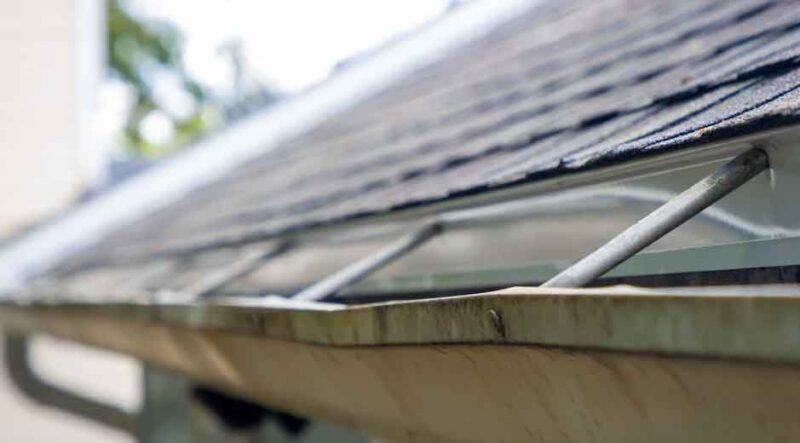
Gutters are held in place by brackets, spikes, or hangers. If these fasteners loosen, corrode, or pull away from the fascia board, the gutter can detach and start to sag. This is especially common in older homes or when gutters are installed without proper support spacing.
- Improper Installation
A gutter system must be correctly sloped toward downspouts, typically a quarter inch for every 10 feet. If installed incorrectly or with insufficient support, gutters can sag due to uneven weight distribution or stress during heavy rains.
- Water Damage to Fascia Boards
When gutters overflow, the water can soak the fascia boards behind them. Over time, wood can rot, causing fasteners to lose grip and the gutter system to sag or collapse.
- Extreme Weather Conditions
Heavy rain, snow, ice dams, and high winds can strain gutter systems. Ice buildup is especially heavy and can cause severe sagging or even gutter detachment.
How to Fix Sagging Gutters Safely
- Clean and Inspect the System
Start by clearing out debris and flushing gutters with water. Once clean, you can inspect for leaks, sagging spots, damaged hangers, and fascia board condition.
- Replace or Reinforce Hangers
Hangers and brackets should be securely attached every 2–3 feet. If they’re loose, bent, or rusted, replace them with new ones.
- Re-level and Re-slope the Gutters
Make sure your gutters have the proper slope to promote drainage. A level and measuring tape help ensure water moves toward the downspouts without pooling.
- Repair Damaged Fascia
If fascia boards are damaged or rotten, they must be replaced to securely support new gutter fasteners. Installing a protective drip edge can also help prevent future moisture damage.
- Install Gutter Guards
To help prevent recurring clogs and added weight from debris, consider installing gutter guards. These help maintain water flow and reduce maintenance needs.
When to Call a Professional
If your sagging gutters are due to structural damage, rotted fascia, or detachment from the roofline, it’s best to call a professional. They can assess underlying issues and ensure repairs are done safely.
Conclusion
Sagging gutters are a sign your home’s drainage system is failing. Addressing the problem early protects your roof, walls, foundation, and landscaping. With regular maintenance, proper installation, and timely repairs, you can keep your gutters strong, secure, and working as they should.