




Introduction: Can Blusher Cause Breakouts?
Is it possible that your favorite pop of color is secretly sabotaging your skin? For those managing breakouts, the simple act of applying blusher for acne prone skin can feel like a high-stakes gamble. It is a common concern: does makeup, especially a product applied directly to the cheeks, contribute to clogged pores and inflammation?
The truth is, while blush itself may not be the primary cause of acne, the wrong formula or application method can certainly exacerbate existing issues. When dealing with sensitive, textured skin, every product choice matters. The goal is to find a blush that enhances your complexion without compromising your skin health.
The Science of Safe Blush: What to Look For
The key to a breakout-free glow lies in the ingredients list. Acne-prone skin requires products that are specifically formulated to be gentle and non-irritating. The most critical term to look for is “non-comedogenic,” meaning the product is designed not to clog pores.
Opting for oil-free formulas is also highly recommended. Excess oil can mix with dead skin cells and bacteria, leading to new blemishes. Look for blushes that are mineral-based or utilize lightweight, synthetic binders instead of heavy oils or waxes.
Ingredient Watchlist: What to Avoid
Certain common cosmetic ingredients are known to be comedogenic or irritating, making them problematic for sensitive skin. It is wise to scrutinize labels and steer clear of these potential culprits.
Heavy silicones, such as dimethicone, can sometimes trap debris on the skin’s surface. Additionally, certain artificial fragrances and dyes can trigger inflammation and redness, which is the last thing anyone with active acne needs. Talc, while generally safe, can sometimes settle into pores and highlight texture if used in large amounts.
Formula Face-Off: Powder vs. Cream vs. Liquid
The texture of your blush plays a significant role in how it interacts with acne and textured skin. Each formula type has its own set of pros and cons that must be weighed carefully.
Powder Blushes are often oil-free and non-comedogenic, making them a popular choice. However, they can sometimes cling to dry patches or emphasize texture and raised blemishes. If you choose powder, ensure it is finely milled and applied with a very light hand.
Cream and Liquid Blushes offer a more natural, skin-like finish, which can be beneficial for textured skin as they don’t settle into pores. The downside is that many cream formulas contain waxes and oils that can be comedogenic. Look for lightweight, gel-based or water-based liquid formulas.
Application Techniques for a Flawless Finish
How you apply your blush is just as important as the product you choose. Aggressive blending or using dirty tools can spread bacteria and worsen inflammation.
The cardinal rule is to use a gentle, tapping or stippling motion rather than sweeping or dragging the product across the skin. This technique prevents disturbing the underlying foundation or concealer and avoids irritating active breakouts.
The Right Tools for the Job
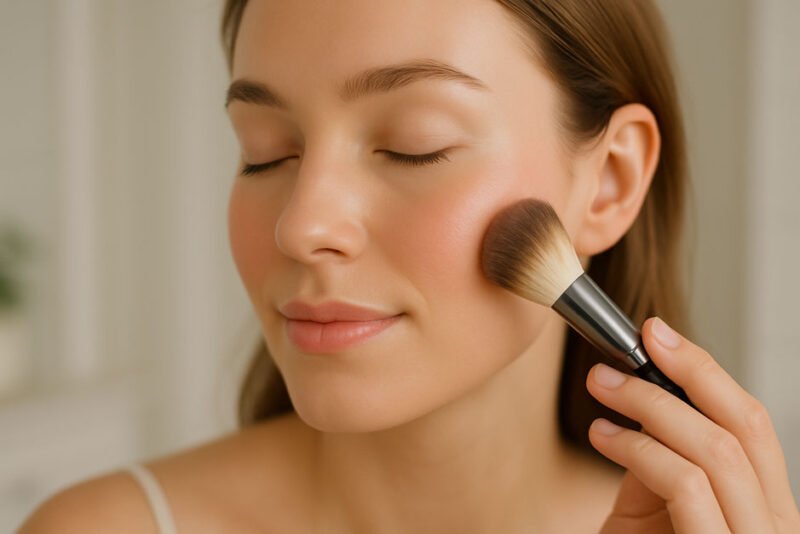
For powder blushes, a fluffy, dome-shaped brush with soft synthetic bristles is ideal. Use it to lightly press the color onto the skin, building up intensity slowly.
For cream or liquid formulas, clean fingertips or a damp beauty sponge work best. The warmth of your fingers can help melt the product into the skin for a seamless look, while a sponge provides a hygienic, controlled application.
Beyond the Blush: Prepping Your Skin
A flawless blush application starts long before the brush touches your cheek. Proper skin preparation is essential for minimizing texture and ensuring makeup longevity.
Always start with a clean, moisturized face. Use a lightweight, non-comedogenic primer to create a smooth canvas and fill in any visible pores or texture. This barrier also helps prevent the blush from sinking directly into the skin.
Frequently Asked Questions (FAQ)
Is powder or cream blusher better for acne-prone skin?
Generally, a lightweight, oil-free powder blusher is considered safer as it is less likely to contain pore-clogging ingredients. However, a non-comedogenic, water-based liquid or gel blusher can provide a smoother finish on textured skin without emphasizing blemishes.
Can I use blush on active breakouts?
It is best to avoid applying any makeup directly onto an open or inflamed breakout to prevent irritation and potential infection. If you must cover it, use a clean, precise concealer brush to lightly dab a non-comedogenic concealer over the spot before applying blush around the area.
What ingredients in blush should I avoid if I have acne?
Avoid heavy mineral oils, isopropyl myristate, certain synthetic fragrances, and D&C Red dyes (especially Red 27 and Red 36), as these are known to be highly comedogenic or irritating. Always check for the “non-comedogenic” label.
How do I clean my blush brush to prevent acne?
You should clean your blush brush at least once a week, or even more frequently if you have active breakouts. Use a gentle, anti-bacterial soap or a dedicated brush cleanser, rinse thoroughly, and lay the brush flat to dry completely before its next use.