




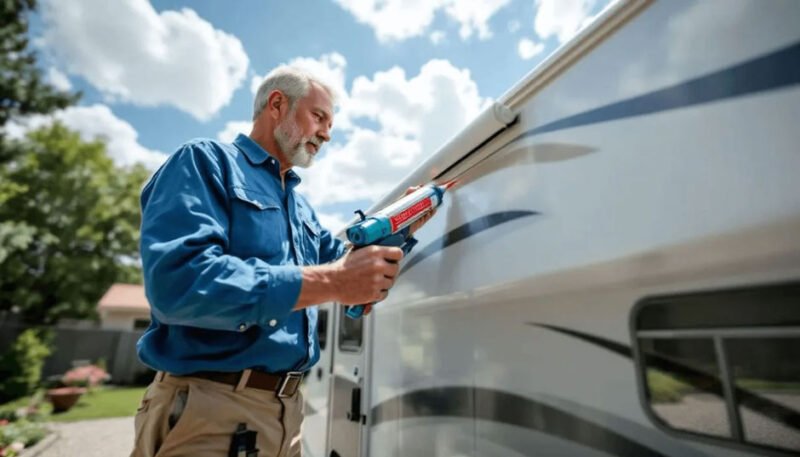
Water intrusion is one of the most expensive problems RV owners face, and it almost always starts at the seams. Roof edges, sidewall joints, vents, and trim lines are constantly exposed to sun, rain, wind, and temperature shifts, which slowly break down sealants over time. Knowing how those seams are maintained is often the difference between preventing damage and dealing with costly repairs later.
Understanding the difference between repair and resealing gives owners more control over maintenance decisions, timing, and cost. For owners researching weather seam repair for RVs, knowing when a seam needs targeted attention versus a full reseal can help protect both the structure and long-term value of the RV.
What RV Weather Seam Repair Actually Involves
Weather seam repair focuses on specific problem areas rather than the entire seal system. This approach is used when sections of sealant have cracked, pulled away, or failed due to age or movement. The goal is to stop water intrusion at the source without disturbing surrounding seams that are still performing well.
A proper repair starts with removing damaged sealant, cleaning the surface thoroughly, and applying a compatible replacement material designed to flex with the RV’s movement. When done correctly, seam repair restores protection while preserving the integrity of the existing seals around it.
What Resealing Means and When It’s Used
Resealing is broader in scope and typically addresses multiple seams at once, or even all exposed seams on the RV. This option is often chosen when sealant has reached the end of its usable life, even if active leaks aren’t visible yet. Over time, UV exposure and temperature changes cause sealants to dry out and lose elasticity.
Rather than repairing isolated spots, resealing refreshes protection across roof edges, trim lines, vents, and transitions. It’s more preventative in nature and is often scheduled as part of long-term maintenance rather than as a response to visible damage.
Repair vs Resealing: The Practical Difference
The key difference comes down to scope and intent. Seam repair targets known failures or vulnerable areas that need immediate attention. Resealing addresses aging systems and is meant to reset the clock on weather protection.
Repair is usually faster and more localized, while resealing requires more prep time and surface coverage. Neither is inherently better, as the right choice depends on the condition of the existing seams, not just the presence of leaks.
When Seam Repair Is the Right Choice
Repair makes sense when damage is limited and caught early. Small cracks, isolated separation, or sealant breakdown around a vent or trim edge can often be fixed without disturbing surrounding areas. This approach is cost-effective and minimizes unnecessary work.
It’s also ideal when inspections show that most seams are still flexible and intact. Addressing problem spots early can prevent moisture from spreading into insulation, framing, or interior panels.
When Resealing Is the Better Option
Resealing becomes the better choice when sealant shows widespread aging, hardening, or shrinkage across multiple seams. Even without obvious leaks, brittle sealants no longer provide proper protection during heavy rain or temperature swings.
For older RVs or units that have seen frequent travel in varied climates, resealing offers peace of mind. It ensures consistent protection across all seam transitions instead of relying on patchwork fixes.
Cost, Time, and Long-Term Value
Seam repair is generally less expensive and quicker to complete, making it attractive for addressing isolated issues. Resealing requires a larger time investment but often reduces the likelihood of future water damage, which can be far more costly to resolve.
Both options add value when done at the right time. The real cost comes from delaying action and allowing moisture to spread unnoticed behind walls or under roofing materials.
Common Mistakes RV Owners Make
One of the most common mistakes is assuming visible leaks are the first sign of failure. In reality, seam breakdown often begins long before water appears indoors. Another issue is using incompatible sealants that don’t adhere properly or flex with movement.
Putting off maintenance, relying on temporary fixes, or sealing over damaged material can also create bigger problems later. Understanding when repair or resealing is appropriate helps RV owners avoid repeat issues and unnecessary expense.