



New floors change a home. They alter its sound, feel underfoot, and fundamental character. This transformation, however, hinges on a single pivot point: who lays it down. The choice between your own hands and a professional crew shapes your budget, timeline, and final satisfaction. It’s a balance of personal capability against the material’s demands, a calculation where pride and perfection often pull in opposite directions. Understanding where that line falls for your specific project is the most crucial step before a single box is opened.
Matching Material to Method
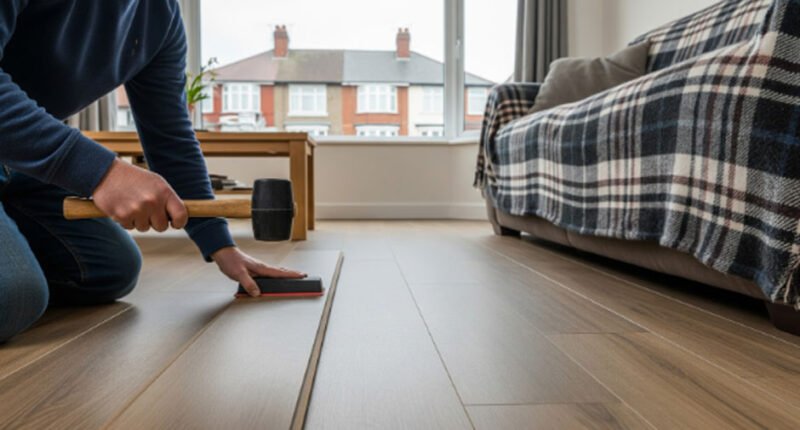
Your selection dictates the difficulty. Some surfaces practically invite confident DIY. Interlocking laminate planks or luxury vinyl tiles (LVT) with a click-lock system are engineered for amateur installation over a smooth underlayment. Others present immediate, non-negotiable barriers. Solid hardwood requiring precise nailing, intricate patterned tile needing meticulous cutting, or sheet vinyl demanding seamless welding are different beasts entirely. Your preferred look from the array of flooring options must be filtered through this lens of install-ability. That’s why consulting with the experts at Allfloors can bridge the gap between your vision and a successful, lasting result, ensuring the product you love is also a fit for your installation reality.
The Foundation’s Verdict
What lies beneath can end a DIY dream before it starts. A perfectly level, dry concrete slab or a smooth plywood subfloor offers a green light for simpler systems. Anything less, a slanted floor, significant cracks, moisture issues, or an uneven old layer requiring removal, demands professional remediation. Installing over a flawed subfloor guarantees failure, amplifying every imperfection into squeaks, gaps, or buckling. Pros possess the tools and know-how to diagnose and correct these hidden problems.
Tool Inventory and Skill Audit
Honesty about your toolbox and your time is essential. Renting a pneumatic floor nailer, wet tile saw, or floor sander represents added cost and a learning curve. Do you own, and know how to expertly use, a laser level, jamb saw, and mallet? Beyond tools, assess your physical tolerance for repetitive kneeling and lifting, and your aptitude for the precise, finicky cuts needed around doorways and pipes. YouTube makes things look deceptively simple.
The Warranty’s Fine Print
That beautiful new flooring likely comes with a manufacturer’s warranty. Read it. Many guarantees are void unless a certified professional performs the installation. For high-value materials, this protection alone justifies the cost of hiring an expert. A DIY mishap that leads to premature wear or failure leaves you solely responsible for the full cost of replacement, erasing any initial savings.
Timeline Versus Time Available
Professional crews work with efficiency born of repetition. They complete in days what might take a diligent but inexperienced homeowner weeks of evenings and weekends. Consider the profound disruption of living without a kitchen or hallway for an extended period. Your available time and tolerance for domestic chaos are real factors. A pro’s speed restores normalcy swiftly.
The Aesthetics of Precision
Some flaws haunt you. A DIY tile job with inconsistent grout lines or a laminate floor with visible gaps at the edges becomes a permanent eyesore you notice daily. Professional installers deliver the crisp, clean lines and seamless finishes that make a room look polished and complete. Their expertise ensures the finished product matches the showroom vision, not just functionally, but visually.
The Hybrid Approach: Smart Delegation
A third path exists. You might handle the demolition and disposal of old materials to save labor costs, then bring in a pro for the critical installation phase. Alternatively, you could hire an expert to tackle the complex, central area of a room, while you manage the simpler perimeter cuts. This hybrid model can optimize both budget and quality.
Making Your Calculated Choice
There’s no universal answer. For a small, square room with a forgiving floating floor and a level base, DIY can be a rewarding victory. For a whole-house installation of a finicky material over a problematic subfloor, professional installation is an investment in sanity and success. Weigh material demands, subfloor condition, your honest skill level, and the value of your own time. The right choice isn’t about being the most capable homeowner; it’s about ensuring your beautiful new floor is also a lasting one.