



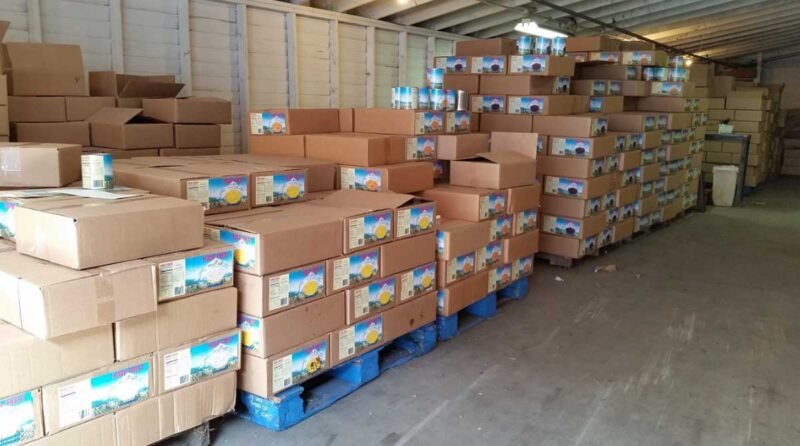
The idea of food preparedness is usually applied in terms of filling shelves, changing supplies, and investing in the right containers. While these measures are crucial, they form just a portion of a strong household policy.
Food storage these days requires a consistent electricity supply. Fridges, freezers, and climate-controlled storage units all operate over electricity. A few hours of power outage can easily compromise all the stocking efforts. Understanding the interplay between food storage and backup power helps ensure food quality and household stability.
Why Food Storage Alone Is Not Enough
Food storage alone creates a false sense of security. Dry goods may survive without electricity, but a large portion of today’s stored food relies on refrigeration or freezing. Prepared meals, frozen produce, and meats, all require constant temperatures.
With power cut off, the internal temperatures rise rapidly. This change may not be immediately obvious, it speeds up spoilage and bacterial growth. In most instances, food that appears safe may actually be unsafe to consume. Food storage loses its long-term value as a reliable protection in the absence of a consistent power supply.
How Power Outages Endanger Food
Power outages compromise food safety faster than homeowners expect. Refrigerators can only preserve safe temperatures within a few hours after power loss. Freezers do a little bit better, but they too are limited.
As temperatures cross safety thresholds, food quality declines and health risks multiply. In addition to the perishables, outages also apply to other items such as temperature sensitive medications and stored leftovers. The financial cost of replacing spoiled food adds up quickly, yet the health consequences of eating contaminated food are much greater.
The Role of Backup Power in a Prepared Home
This is where alternative power supply becomes a vexing component of a prepared home. A generator:
- Ensures that essential appliances continue operating during outages
- Preserves food safety
- Reduces waste
A reliable backup power lets refrigerators and freezers maintain stable temperatures during extended blackouts. Backup systems make preparedness proactive and not reactive. Instead of discarding food and scrambling for replacements, households maintain continuity and control. For homes that experience frequent outages, the value of a generator extends well beyond convenience.
Choosing the Right Generator for Food Protection
Choosing the right generator requires a clear understanding of food storage needs. Many households assume they need whole-home power when food protection may only require a small, well-matched system.
Portable generators can support essential appliances when used correctly, while standby units provide seamless protection for longer outages. Homeowners must consider wattage requirements, startup loads, and fuel availability.
Solar backup systems can also provide a sustainable and quieter alternative. Especially when paired with battery storage for overnight use. The goal is not excess capacity, but reliability where it matters most.
Integrating Backup Power Into a Food Storage Plan
Integrating backup power into a food storage plan also requires attention to infrastructure. Electrical systems must be capable of safely supporting generator use. Older homes may face limitations. Some even need the wiring replaced before a backup system can be installed safely.
Maintenance is also necessary. Routine maintenance, transfer switches, and proper load management mean that backup power operates as it should in emergencies. An untested or untended generator can give way at the moment it is needed most. This prompts homeowners to search for “generator repair near me” at the worst possible time.
A Practical Preparedness Checklist for Homeowners
Preparedness improves when planning is practical and repeatable. Before outages strike, homeowners should:
- Document which appliances must remain powered
- Label circuits clearly
- Practice safe generator operation
Fuel storage, battery readiness, and clear usage priorities reduce confusion during emergencies. Food safety can be extended with simple steps, such as keeping freezer doors closed and monitoring internal temperatures. When backup power planning becomes routine rather than reactive, food storage transforms from a static reserve into a dependable system.
Endnote
True preparation comes from coordination, not isolated actions. Food storage plans should account for duration of refrigeration, priority order of appliances, and the source of power. Generators should be tested under actual conditions, fuel supplies, and specified usage plans.
In the end, food resilience is about protection, continuity, and safety. Once homeowners acknowledge the link between food storage and backup power, they can protect both their food investment and peace of mind.